

Client: Hydraquip (Hydraulic, electrohydraulic, and electric systems)
Agency: Sitewired Web Solutions (Web Design & Development)
Project Overview
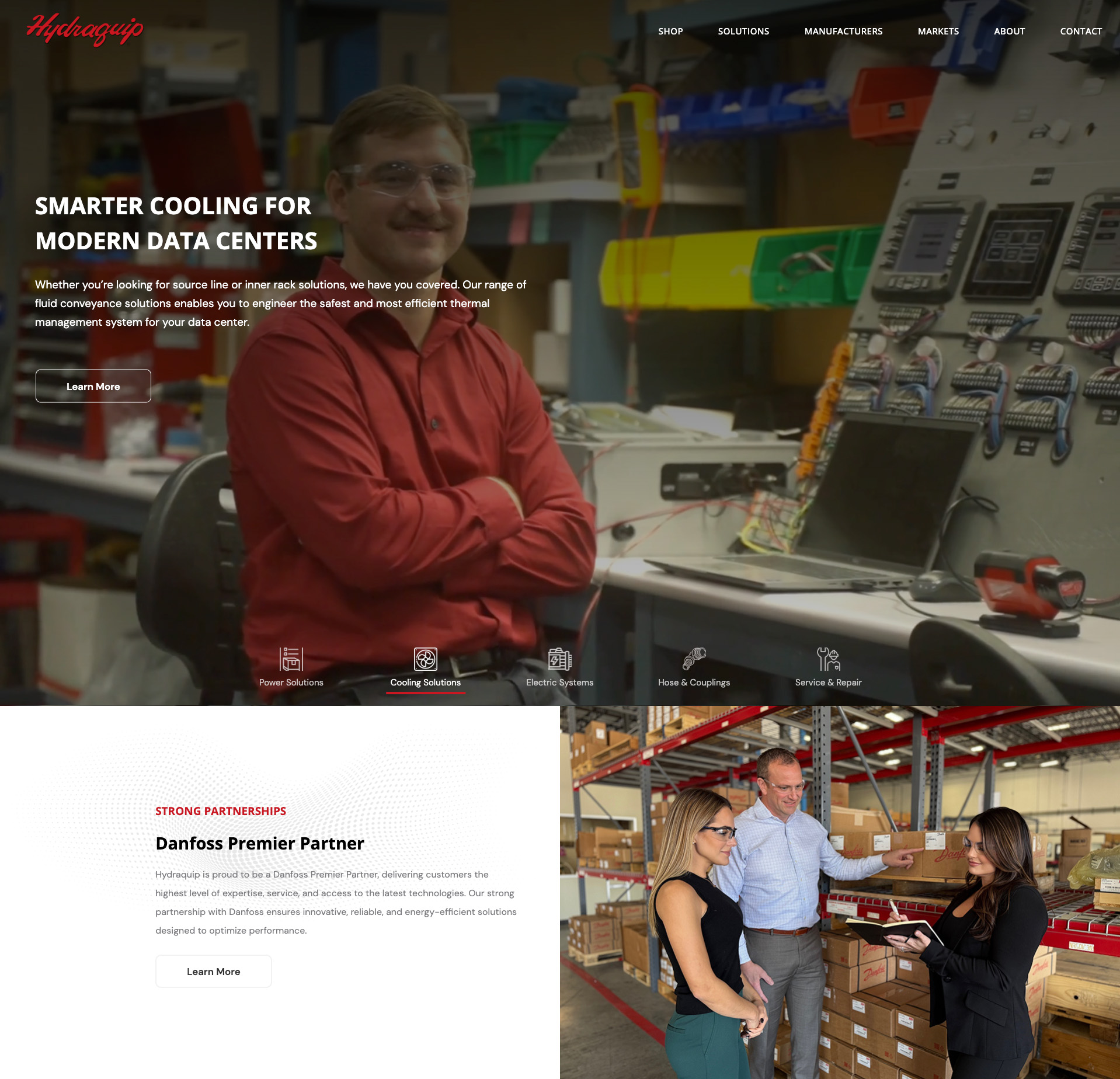
Hydraquip needed a modern website that could clearly communicate a growing set of solutions, support multiple locations, and make it easier for customers to take action—whether that meant contacting the team, finding service capabilities, or shopping online. The finished site positions Hydraquip around its core message (“Powering Trust. Innovative Results.”) and presents a cleaner, more navigable experience across Solutions, Markets, and About content—while keeping “Shop” accessible as a primary pathway.
The Challenge
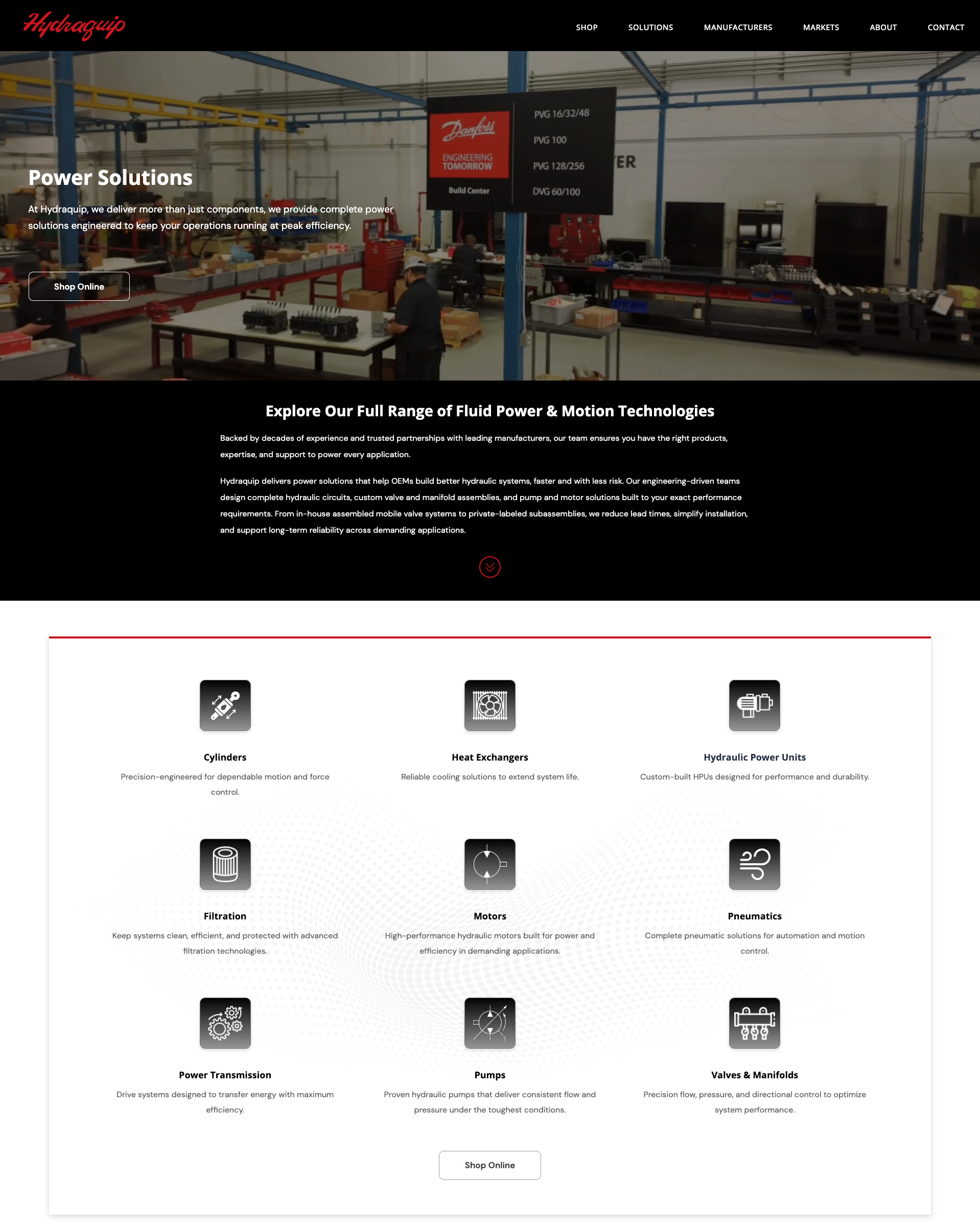
Hydraquip has a wide footprint and expanding offerings across hydraulic service/repair, hose & couplings, cooling solutions, and electric systems—plus a separate eCommerce experience for purchasing parts.
Key issues the redesign needed to solve:
- Clarify navigation so users can quickly find Solutions, Markets, Manufacturers, and Contact paths without digging.
- Support multi-location discovery (Houston HQ plus multiple regional locations) to build confidence and shorten time-to-contact.
- Make the site conversion-focused with stronger structure, messaging, and UX—aligned to Sitewired’s website redesign methodology (clarity, performance, and usability).
- Bridge marketing + commerce by keeping the main Hydraquip site and the shop experience connected and easy to access.
Goals & Strategy
Sitewired approached Hydraquip’s redesign like a “growth-ready” platform build, focusing on:
- User-first site architecture
A streamlined top navigation prioritizes the main decision paths: Shop, Solutions, Manufacturers, Markets, About, and Contact—reducing friction for both buyers and service-seekers. - Conversion-focused page layouts
Key pages feature clear headings, scannable sections, and repeated calls-to-action that move visitors toward contacting Hydraquip or shopping online. - Credibility signals throughout
The website highlights footprint and scale (years of experience, states served, employee count) as trust builders—especially important for industrial buyers and maintenance teams making time-sensitive decisions.

What Sitewired Implemented
1) Clearer Service/Repair Positioning
The Service & Repair page was structured to communicate capabilities fast: factory-authorized repair/testing locations, in-house + field support, and scannable capability blocks (test stands, certified technicians, evaluation reports, pump/motor testing, container program).
2) Stronger Multi-Location UX
The Contact page was redesigned to function like a true “hub,” listing corporate HQ and regional locations in a clear, consistent format (addresses, phone numbers, map links, hours).
3) Content Engine for SEO & Authority
Hydraquip’s “News & Blogs” section is structured like an ongoing resource center with categorized posts and pagination—supporting long-term organic growth and topical authority.
4) Shop Integration Without Confusion
The primary Hydraquip site links to a dedicated shop portal (shop.hydraquip.com) that’s built for ordering, account features, and quick reorders—while the core website remains focused on solutions, credibility, and lead generation.
Outcomes (Qualitative)
While the public site doesn’t publish analytics, the redesigned Hydraquip experience clearly supports measurable business outcomes such as:
- Faster path to action: visitors can quickly choose “Shop” or “Contact” from anywhere in the site.
- Better findability of services: Service & Repair capabilities are broken into clear blocks, helping customers self-qualify before reaching out.
- Improved trust and scale messaging: site-wide “regional footprint” stats reinforce credibility for enterprise and industrial buyers.
- Ongoing organic growth foundation: consistent publishing in News & Blogs supports sustained SEO momentum.
What This Means for Similar Industrial Brands
Hydraquip is a good example of what happens when an industrial company treats its website like a sales + service platform (not just a brochure): clearer navigation, stronger trust signals, and a clean bridge between marketing pages and ecommerce.
